
Pharmaceutical Drug Manufacturers vs. Contract Manufacturers: What’s the Difference?
When we discuss the pharmaceutical sector, we can be certain it will remain prosperous, as demand for pharmaceutical products is rising rapidly worldwide.
To meet the growing demand, the pharmaceutical industry relies heavily on two main production models: contract manufacturers and pharmaceutical drug manufacturers. Many small and medium-sized pharmaceutical companies are taking advantage of these two terms.
Both are very crucial to the delivery of safe and effective medications, but their functions, operating models, and cost structures differ significantly.
Pharmaceutical companies have historically invested heavily in in-house drug manufacturing, managing every aspect of the process from research to production. However, the trend toward outsourced pharmaceutical manufacturing has increased due to rising operating costs, stringent regulations, and demand for variable production capacity.This article shows how to select the best manufacturing partner, breaks down each model, and contrasts cost and regulatory obligations. It also explains why GCCPL is unique in third-party pharma manufacturing and API manufacturing in India.
What Is a Pharmaceutical Drug Manufacturer?
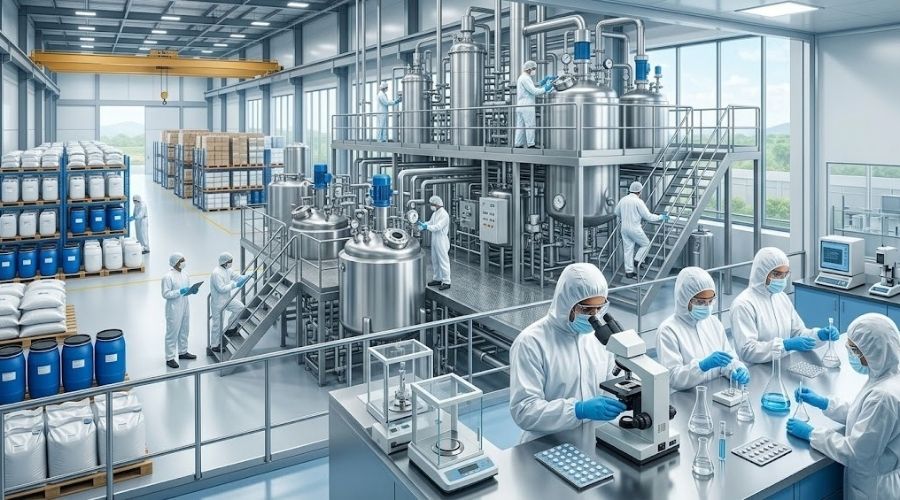
Pharmaceutical drug manufacturers are essential to the production of drugs that maintain human health and treat a variety of illnesses. It guarantees that the medications are produced in accordance with stringent regulatory requirements, ensuring accuracy, consistency, and safety. This procedure entails turning raw materials into completed goods that are efficient, safe, and ready for delivery.
The ability of pharmaceutical drug manufacturers to deliver a consistent supply of drugs that meet the highest quality standards is crucial for curing illnesses, preventing medical emergencies, and improving public health outcomes.
What Is a Contract Pharmaceutical Manufacturer?
Contract manufacturers operate as a service model when a pharmaceutical company (the client) provides a manufacturing entity with a comprehensive formula, raw materials, and specific manufacturing procedures. The contractor’s primary responsibility is to adhere strictly to the client’s instructions. It is comparable to the idea of “manufacturing for hire.”
The client retains complete ownership and control over product specifications, intellectual property (IP), and supply chain. By supplying the tools and workers needed to produce the pharmaceutical product in compliance with the terms of a comprehensive contract, contract manufacturers effectively become an extension of the client’s manufacturing facilities.
Key Differences between Pharmaceutical Drug Manufacturers & Contract Manufacturers
Both approaches produce pharmaceutical products; their operating structures are different:
Ownership & Strategy: R&D and marketing are the main priorities of pharmaceutical drug manufacturers, who are the brand owners. Contract manufacturers supply infrastructure, technology, and experience while also concentrating on production.
Capital Investment: The initial outlay for in-house drug manufacturing is substantial. Capital expenses are reduced by outsourced pharmaceutical manufacturing.
Operational Control: Complete control is provided via internal production. Contract manufacturing pharma offers freedom but entails shared responsibility.
Expertise Access: Pharmaceutical contract manufacturers in India are experts in process improvement, regulatory compliance, and API manufacturing in India, providing clients with immediate access to industry knowledge.
Cost Comparison –Which Model Is More Efficient?
When comparing contract manufacturers with pharmaceutical drug manufacturers, cost is frequently the most determining factor.
Significant investments in land, equipment, clean rooms, compliance certificates, and qualified personnel are necessary for the construction and upkeep of in-house drug manufacturing facilities.
On the other hand, outsourced pharmaceutical manufacturing is typically more cost-effective for startups, expanding brands, or lesser-known brands, providing savings of 30–40% by eliminating the need for significant capital investments in buildings, machinery, and staff.
Additionally, third-party pharma manufacturing enables a quicker market entry by eliminating the lengthy setup time required for internal plants.
Compliance & Quality Control –Who Handles What?
Regulatory compliance cannot be compromised in pharmaceutical manufacturing.
Strict Current Good Manufacturing Practices (CGMP) must be followed by pharmaceutical drug manufacturers to ensure the safety, identity, strength, and purity of their products. Strict quality control (QC) of raw materials, manufacturing procedures, and all finished goods is necessary for compliance and is frequently audited by organizations such as the FDA or EMA. Recalls, fines, and supply chain interruptions may result from noncompliance with these requirements.
It’s easy to assume that a contract manufacturer is going to take it upon themselves to meet your quality standards once you hand your product over to them. What’s really needed is careful oversight and transparent communication to ensure the quality expectations your brand relies on. Falling short of product quality standards can result, after all, in financial losses, damage to your brand, or, worse, legal trouble.
When In-House Manufacturing Makes Sense
In some situations, in-house drug manufacturing is still advantageous despite the growth of contract manufacturers:
- Intellectual property, processes, and quality must all be under your complete control.
- Your product needs regular modifications or extensive customization.
- You are manufacturing low-volume or specialty medications for which the costs of outsourcing outweigh the benefits.
- Infrastructure and skilled staff are already in place.
- Your priorities are margin control and long-term cost reduction.
How to Choose the Right Contract Manufacturing Partner
For long-term success, choosing the correct contract manufacturers is essential. Important factors to consider are:
Certifications and Compliance: It’s very crucial to confirm whether the contract manufacturers have ISO, GMP, and WHO certifications.
Product Selection: To be viable, the business should offer a range of medication types from external manufacturers, including tablets, capsules, liquids, injections, creams, and topical preparations, as well as natural health products. A diverse portfolio is a guarantee of long-term growth.
Infrastructure and Technology: Modern facilities and technology ensure high-quality production. Modern equipment, hygienic facility, and sufficient R&D facility are all the requirements for a contract manufacturing business partner.
Cost and Pricing Structure: Compare the prices offered by different contract manufacturing pharma. Cost is an important consideration, but never sacrifice product quality for lower costs.
On-time Delivery: Your company may suffer from delayed deliveries. To deliver goods on time, reputable pharmaceutical contract manufacturers need to have efficient supply chain management and logistics.
Why GCCPL Is a Trusted Contract Manufacturing Partner
GCCPL is a well-known brand among contract manufacturers, providing clients worldwide with comprehensive outsourced pharmaceutical production services. GCCPL helps pharmaceutical brands from concept to commercial production because of its modern facilities, robust regulatory compliance, and extensive experience in contract manufacturing pharma.
They are a one-stop shop due to their expertise in packaging, finished dosage manufacturing, and API manufacturing in India.
Conclusion
The decision between a contract manufacturer and manufacturers of pharmaceutical drugs is influenced by factors like budget, production target, regulatory approaches, and also business size. Outsourcing the pharmaceutical manufacturing to the contract manufacturers offers agility, cost savings, and faster scalability, while in-house manufacturing provides control and privacy.
FAQs (Frequently Asked Questions)
What are the different types of pharmaceutical manufacturers?
Pharmaceutical manufacturers include brand/innovator manufacturers, generic drug manufacturers, API manufacturers, contract manufacturers (CMOs/CDMOs), and biologics manufacturers, each handling different production roles.
What is a contract manufacturer in pharma?
A contract manufacturer produces medicines for another pharmaceutical company based on its formulations, specifications, and regulatory requirements.
What does CMO mean in pharmaceuticals?
CMO stands for Contract Manufacturing Organization, a third-party company that manufactures drugs for pharmaceutical brands.
What is the main difference between pharmaceutical drug manufacturers and contract manufacturers?
Drug manufacturers own and market the product, while contract manufacturers produce medicines based on client instructions.
Is contract pharmaceutical manufacturing more cost-effective than in-house manufacturing?
Yes, it usually reduces costs by avoiding heavy investments in facilities, equipment, and workforce.
When should companies choose in-house pharmaceutical manufacturing?
In-house manufacturing is ideal when companies need full control over intellectual property, customization, or already have manufacturing infrastructure.