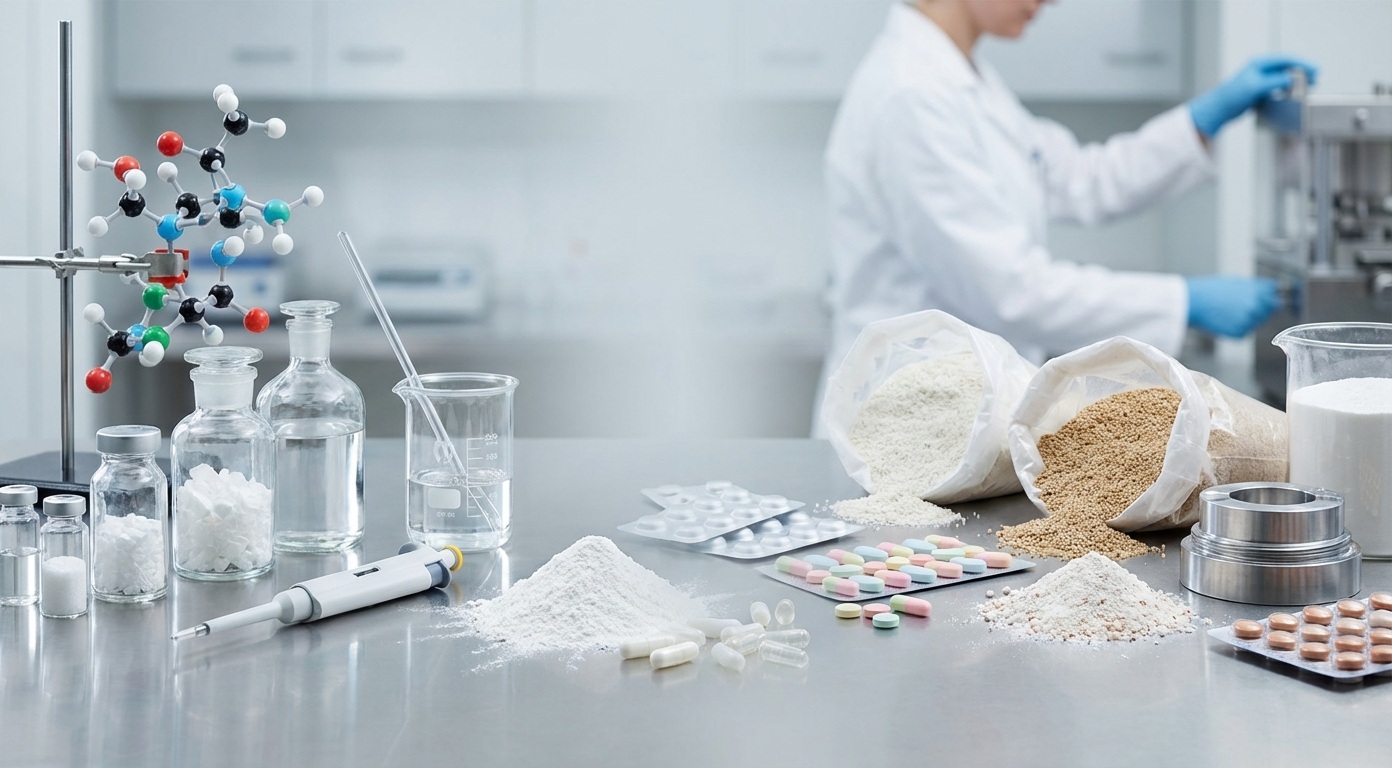
An active pharmaceutical ingredient and excipient both are essential components of a medicine, but understanding the difference between API and excipients is a necessity today.
Pharmaceuticals are very vast, and as a responsible person, you should know what you eat and how it is prepared. Lots of people have weird myths about medicines. This blog is for all of you wanting to learn the basics of pharmaceutical drugs.
What Is an Active Pharmaceutical Ingredient (API)
An Active Pharmaceutical Ingredient (API) is the active component in a pharmaceutical drug responsible for treating the disease and providing relief in the body. Without an API, a medicine is just a piece of inactive components that do not produce any effect on our bodies. Examples of APIs include paracetamol and acetylsalicylic acid in Aspirin.
What Are Excipients in Pharmaceuticals?
Excipients in pharmaceuticals are the inactive components of a medicine, alongside the API, that support manufacturing, enhance stability, improve bioavailability, and ensure patient safety. The excipients are also known as fillers, additives, and inactive ingredients. These inactive substances make APIs consumable by humans. Common excipients are biologically inert and naturally occurring, such as corn, wheat, sugar, and minerals.
Key Differences Between API and Excipients
Both the excipients and APIs are necessary for medicines to work properly. But both of these are opposite to each other. Hence, let us discuss the difference between API and excipients, as mentioned below:
Function
The API produces the intended pharmacological effects, killing bacteria and acting as a painkiller. The role of excipients comes during the manufacturing, stability, appearance, and delivery of an API.
Activity
An API is a pharmacologically active component. It acts on the targeted area, creating the effect. Excipients are the inactive components of a medicine and exhibit inert properties at the given concentration.
Proportion
The API is present in small quantities in the final product. The excipients are present in larger bulk quantities in the final product.
Regulatory Scrutiny
APIs are crucial and must meet many criteria to address safety concerns, and are subject to stringent safety, purity, and efficacy regulations. Even the excipients are subjected to the safety and purity concerns, but not with the same strictness.
Capital Investment
The capital required to manufacture an API is higher due to research, development, and manufacturing processes. But the production of excipients requires a lower capital investment than API manufacture.
Role of API and Excipients in Drug Formulation
After the difference between API and excipients, let’s move on to the next part of this blog: the role of APIs and excipients.
The role of an API is to produce therapeutic effects, such as pain relief and symptom management. It already has the target defined and hence, acts at the desired place. The better the API quality, the better the API functions.
The basic role of an excipient is to protect the API from heat, light, and humidity, and to extend its shelf life. The excipient enhances the solubility rate and dissolution of the poorly soluble drug. The excipient acts as a filler, binder, and lubricant, enabling powders to be processed into tablets and capsules.
API and Excipient Examples
There are many API and excipient examples in the pharmaceutical industry. Let us discuss them in detail:
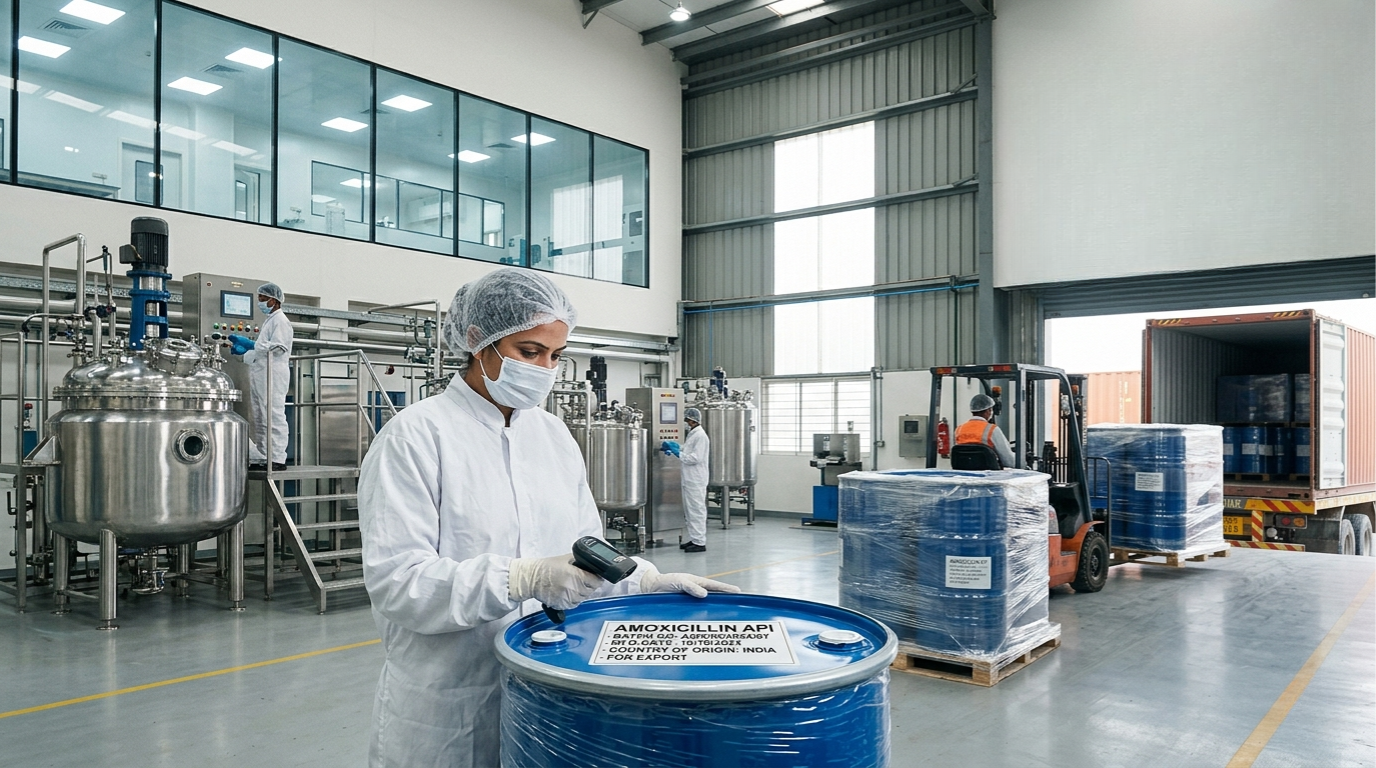
Common examples of APIs include acetaminophen, paracetamol, Amoxicillin Trihydrate Compacted, Amlodipine Besilate, Vitamin B3, Levetiracetam IP, Azithromycin, and many more.
You can find a lot of other APIs that are very important in the pharmaceutical industry manufactured by GCCPL. Hence, GCCPL acts as one of the best custom API manufacturers following all the guidelines and producing precise medicines with highest purity.
Examples of common excipients include the different categories.
- Binders – starch 1500, povidone, cellulose derivatives.
- Diluents/Fillers – Lactose, Mannitol, Microcrystalline Cellulose
- Disintegrants – Croscarmellose sodium, Sodium starch glycolate, Crospovidone
- Lubricants – Magnesium stearate, talc, stearic acid
- Preservatives – parabens, boric acid
Why Both API and Excipients Are Important in Medicines
Both excipients and APIs are important constituents of a pharmaceutical drug. Both of them ensure the medicine remains effective, safe, stable, and easy for patients to consume.
The API is the one that acts on the targeted point and makes the intended effect, making us feel relaxed. But manufacturing an API is a tedious task. The APIs are produced in strict compliance with regulatory requirements to meet the required purity and efficiency. Hence, it is crucial to find a reliable API manufacturer producing all the APIs according to the guidelines and with a lot of care.
The excipient helps the API act on its intended target area by maintaining moisture, heat, light, and other factors that keep the API safe. Also, the excipients determine how and when the API is released in the body. They also help in giving a particular form to the medicines. Also, they make the medicines palatable, color-coded to identify, and easy to swallow.
The difference between API and excipients is explained in the blog, and it is also clear that both are very important for the medicine to remain effective. The general public must understand the pharmaceutical manufacturing process. They should know what they are consuming and how it affects their bodies. Let us be aware and spread this to every individual.
FAQs
What is the primary difference between an API and an excipient?
An Active Pharmaceutical Ingredient (API) is the pharmacologically active component of a medicine responsible for treating a disease and providing therapeutic relief. In contrast, an excipient is an inactive substance that aids in the delivery, stability, and manufacturing of the drug but does not produce any pharmacological effect on its own.
What role do excipients play in pharmaceutical formulations?
Excipients serve multiple essential functions, such as protecting the API from heat, light, and humidity to extend its shelf life. They also act as binders, fillers, and lubricants to shape powders into tablets or capsules, improve the drug’s solubility and bioavailability, and make medicines easier to identify and swallow.
Can you provide examples of common APIs and excipients?
Common examples of APIs include Paracetamol, Amoxicillin Trihydrate Compacted, and Amlodipine Besilate, which directly target and treat symptoms. Examples of excipients include lactose and mannitol (fillers), starch and povidone (binders), magnesium stearate (lubricants), and parabens (preservatives).
Why is the capital investment higher for manufacturing APIs compared to excipients?
Manufacturing an API requires a significantly higher capital investment because it involves extensive research, complex chemical development processes, and strict regulatory scrutiny to ensure precise safety, purity, and efficacy. Excipient production generally costs less because these inactive components are often naturally occurring and do not require the same level of complex development.