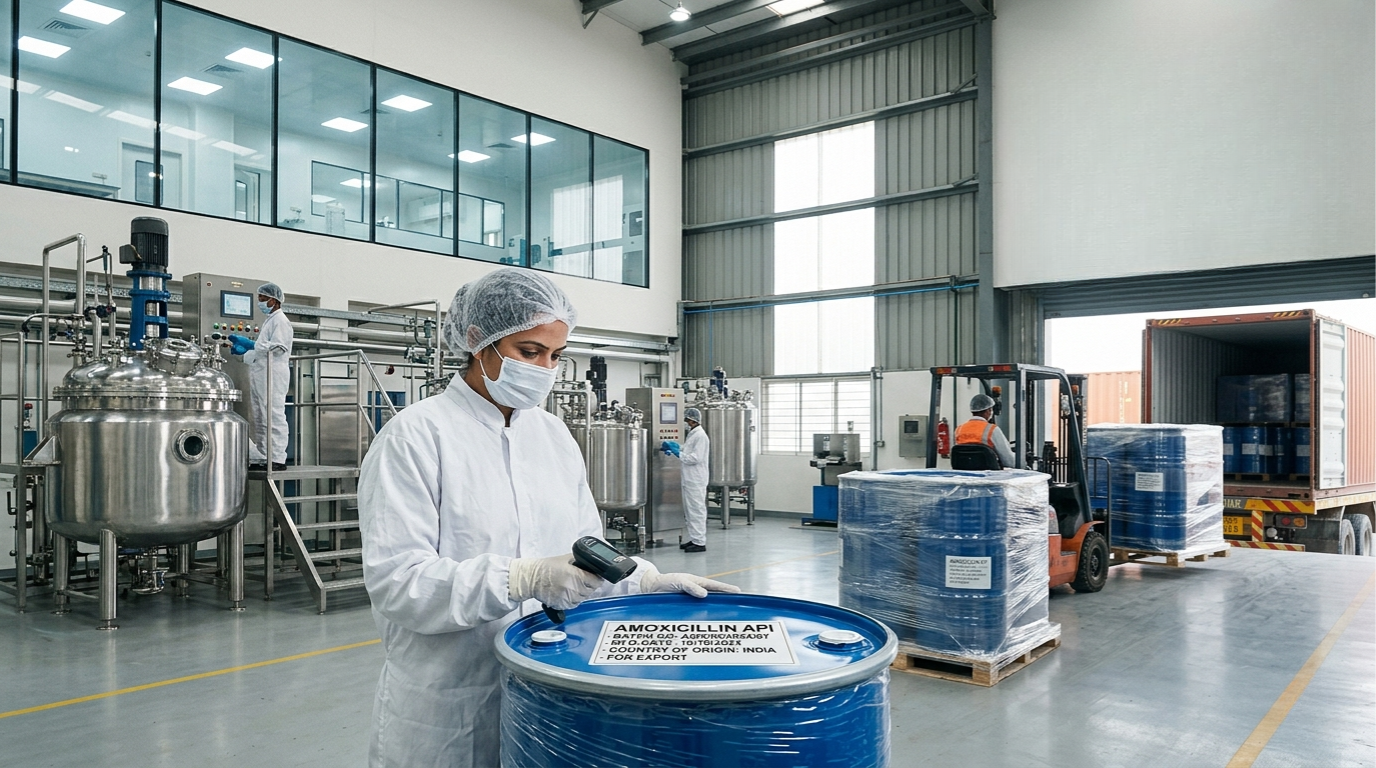

If you work in pharma, or plan to, one question will follow you throughout your career. How do you guarantee that every tablet, capsule, or injection leaving your facility is safe? The importance of GMP in the pharmaceutical industry is that it turns that question from an aspiration into a verifiable, auditable answer.
This article gives you a structured, jargon-free breakdown of what GMP is, where it came from, how it works, and what happens when it fails.
What Is GMP? A Clear Definition for the Pharmaceutical Industry
Good manufacturing practices in pharmaceuticals (GMP) are a system of regulations and quality controls that ensure medicines are consistently produced to defined safety and quality standards. GMP covers everything from raw material sourcing to finished product release; every step in between is governed, documented, and verifiable.
GMP vs. cGMP – What Is the Difference?
| GMP | cGMP | |
| Full form | Good Manufacturing Practice | Current Good Manufacturing Practice |
| Focus | Core quality standards | Up-to-date technology and systems |
| Key requirement | Follow defined procedures | Continuously update practices as science advances |
| Enforced by (US) | General regulatory expectation | FDA under 21 CFR Parts 210 and 211 (Source: U.S. FDA, 2023) |
| Implication | Sets the baseline | Raises the bar over time |
The “c” in cGMP stands for “current”. It means your quality systems cannot stay static. They must keep pace with current scientific standards and available technology. A process that was acceptable ten years ago may no longer meet cGMP requirements today.
Key Takeaway: If your facility is only meeting GMP as it was defined at your last audit, you may already be falling short of cGMP expectations.
The 5 Pillars of GMP in Pharmaceuticals
The GMP guidelines in pharmaceutical industry frameworks like the WHO, the FDA, and India’s Schedule M all converge on five foundational pillars.
People – Training and Qualification
Your process is only as reliable as the people running it. GMP requires every employee involved in production, quality control, or storage to be trained, qualified, and assessed for the specific tasks they perform. Every employee here must be qualified and officially authorized to perform the task. Training records must be documented, up to date, and available for inspection at any time.
If a new team member performs a critical task before their training record is complete, that is a GMP deviation, regardless of whether the task was done correctly.
Premises and Equipment – Clean, Controlled Environments
Facilities must be designed, built, and maintained to prevent contamination and cross-contamination between different products. Equipment must be regularly qualified and calibrated. The physical layout of your facility, including airflow patterns, drainage design, and surface materials, is a GMP requirement.
For example, an uncontrolled airflow path between two production areas is the kind of finding that can invalidate a batch and trigger a regulatory observation during an inspection.
Processes – Standardised and Validated Procedures
Every manufacturing step must follow a validated procedure, which means you have documented proof that the process consistently delivers results that meet its specifications. No improvisation, no undocumented adjustments. Consistent outcomes require consistent, controlled inputs.
Process changes, even minor ones, typically require revalidation before adoption.
Products – Raw Material Quality and Traceability
GMP requires testing and formal approval of every raw material before it enters production. Full traceability means you can follow any ingredient from its source supplier through to the finished, released batch. This capability is the foundation of any credible product recall.
If a supplier changes the source of a raw material without notifying you, and you have no incoming material testing protocol, you may release a non-conforming batch without knowing it. In this case, you are unaware of the quality of the products released. Hence, it is very important to test the raw materials before they are used.
Procedures – Documentation and Record-Keeping
If it was not written down, it did not happen. Batch records, standard operating procedures (SOPs), deviation logs, and change control records are evidence that your facility operated in compliance. Auditors do not take your word for it; they read your records.
A well-run facility with poor documentation will fail a GMP audit. Hence, documentation and record maintenance are necessary.
These 5 GMP guidelines in the pharmaceutical industry are very important, and hence, a reliable pharmaceutical manufacturer like GCCPL will follow them very religiously.
10 Key Principles of GMP in the Pharmaceutical Industry
These ten principles underpin GMP compliance across the WHO, FDA, and CDSCO frameworks. Use this as a self-assessment checklist for your own operations.
| Principle | In Practice |
| Quality must be built in – not tested in at the end | Design quality into processes, not just final product checks |
| Written procedures must exist for every operation | No undocumented processes |
| All procedures must be followed consistently | No informal workarounds |
| Documentation must be contemporaneous | Record actions as they happen, not after the fact |
| Deviations must be investigated and documented | All exceptions are tracked and explained |
| Raw materials and products must be tested before release | No assumptions about supplier quality |
| Equipment must be qualified, calibrated, and maintained | Calibration logs must be current |
| Premises must prevent contamination and mix-ups | Layout and hygiene are regulatory requirements |
| Personnel must be trained and health-assigned | Training is ongoing, not a one-time event |
| Product recalls must be possible at any time | Full traceability is non-negotiable |
These principles appear in some form across every major GMP standard, starting from the WHO Technical Report 961 to India’s revised Schedule M.
Why Is GMP Important in Pharmaceutical Production?
The short answer is because patients cannot verify the quality of the medicines they consume. Understanding means recognizing that every time a patient takes a medicine, they place complete trust in your manufacturing system. That trust is not a given. It must be structurally earned.
Protecting Patient Safety
Substandard or contaminated medicines cause direct, measurable harm. The WHO identifies substandard and falsified medicines as a significant global health threat, linked to treatment failures and the growing threat of antimicrobial resistance.
GMP is the primary control system that prevents contaminated, mislabelled, or incorrectly dosed products from reaching patients. No downstream quality check replaces upstream manufacturing control. Quality control testing at the end of production catches failures. GMP prevents them from occurring.
Boosting Pharmaceutical Export Opportunities from India
India has built a strong global reputation as a supplier of affordable, high-volume generic medicines. It is a position that depends entirely on maintaining verified GMP standards. Regulated markets, including the US, EU, Japan, and Australia, require GMP certification from every supplier before granting market access. A facility that cannot pass an FDA or EU GMP inspection cannot export to those markets.
GMP compliance is not a cost of doing business. It is the entry ticket to the world’s most valuable pharmaceutical markets.
Ensuring Regulatory Compliance with WHO, FDA, and CDSCO
In India, pharmaceutical quality assurance is governed by CDSCO under the Drugs and Cosmetics Act, 1940. Schedule M specifies the GMP requirements that Indian manufacturers must meet. Non-compliance can result in license suspension, product recalls, or export restrictions. WHO prequalification is typically required for supplying medicines to UN procurement agencies and requires demonstrated compliance with GMP.
Benefits of GMP Compliance in Pharma
The benefits of GMP compliance in pharma go well beyond passing your next inspection.
| Benefit | What It Means in Practice |
| Fewer product recalls | Consistent processes produce consistent, releasable products |
| Broader market access | GMP-certified facilities can supply regulated global markets |
| Reduced enforcement risk | Proactive compliance avoids warning letters, bans, and shutdowns |
| Stronger buyer confidence | Institutional and export buyers require GMP certification |
| Lower operational waste | Validated, documented processes reduce variability and rework |
| Stronger brand reputation | GMP certification signals reliability to partners and regulators alike |
Worth knowing: the operational benefits of GMP, like reduced rework, fewer batch failures, and less wastage, often deliver measurable cost savings that offset the investment in compliance infrastructure.
What Happens When GMP Is Not Followed? Real-World Consequences
The consequences are not theoretical. They are documented, public, and serious.
In 2012, the New England Compounding Centre (NECC) in the United States shipped contaminated steroid injections that triggered a fungal meningitis outbreak, resulting in 64 confirmed deaths and 753 fungal infections. Investigators found repeated GMP violations, including inadequate sterility controls and compromised clean-room conditions.
The facility was permanently shut down, and in 2017, the owner was convicted on federal racketeering and fraud charges (Source: US Department of Justice, 2017).
Are you confident your facility could withstand an unannounced regulatory inspection today? If the answer is uncertain, that uncertainty is itself a compliance risk.
The three tiers of consequence when GMP fails:
- Patient harm – contaminated or substandard products reach end users
- Regulatory action – warning letters, import alerts, license suspension, or criminal prosecution
- Commercial damage – loss of export eligibility, customer contracts, and market reputation
How GMP Compliance Is Monitored and Enforced
Compliance is not self-declared. It is independently verified.
Regulatory bodies such as the CDSCO in India, the FDA in the US, and the EMA in Europe conduct both scheduled and unannounced inspections of manufacturing facilities. Inspectors assess documentation, observe live processes, and evaluate premises against applicable GMP standards. Facilities that meet the requirements receive a GMP certificate, which is typically required for export registration and institutional procurement. Those that do not may receive observations, warning letters, or import restrictions.
Frequently Asked Questions About GMP in Pharmaceuticals
Why is GMP important in pharmaceutical production?
GMP ensures every medicine that leaves your facility is safe, correctly dosed, and of consistent quality – regardless of batch number or production shift. Without it, product quality depends on individual judgment rather than controlled systems. The consequences of getting this wrong include patient harm, product recalls, loss of export licenses, and, in serious cases, criminal liability for individuals within the organization.
What are the 5 pillars of GMP?
The five pillars are People, Premises and Equipment, Processes, Products, and Procedures – each representing a distinct domain of manufacturing control that auditors assess independently. Taken together, they form the structural foundation of every GMP audit conducted by the WHO, FDA, and CDSCO, and a documented weakness in any single pillar is sufficient grounds for a non-compliance finding across the whole facility.
What are the 4 types of validation?
| Validation Type | What It Confirms |
| Process Validation | The manufacturing process consistently produces a product meeting its specifications |
| Cleaning Validation | Cleaning procedures effectively remove residues and prevent cross-contamination |
| Analytical Method Validation | Testing methods are accurate, reproducible, and fit for their intended purpose |
| Computer System Validation | Software used in manufacturing or quality systems performs reliably as intended |
All four are core requirements under GMP frameworks enforced by the WHO, the FDA, and the CDSCO.
The importance of GMP in the pharmaceutical industry is not a compliance checkbox. Still, it is the system that protects patients, enables global market access, and defines whether your facility is trustworthy at scale. For Indian manufacturers operating under CDSCO’s revised Schedule M, the standard is clear, and the expectation is current readiness. As a practical next step, conduct an internal gap assessment of your facility’s documentation and validation records against the revised Schedule M requirements, and resolve any findings before your next inspection window opens.