Whenever you feel uneasy or have a health issue, you take medicines, but have you thought about how things take place in the background? Well, the component that works to make us feel better is the Active Pharmaceutical Ingredient (API).
But, as consumers, we also need to understand the types of API in pharma. What are you consuming? Why does it act? Let us know all these answers in this blog.
What Is an API in the Pharmaceutical Industry?
API Full Form and Basic Definition
API stands for Active Pharmaceutical Ingredient. It is the component in a medicine that produces the therapeutic effect, such as relief, healing, or treatment. Every approved drug contains at least one API, also called a drug substance or bulk drug.
Take Paracetamol. The Paracetamol molecule itself the API – tells your body to reduce fever and ease pain. Everything else in that tablet is there just to support it.
How APIs Differ from Excipients
So if the API does all the work, what is everything else in a tablet doing?
Excipients are all the other components in a medicine except the APIs. These are important to make formulations, stability, and delivery of medicine.
Classification of APIs in Pharma: How Are They Categorized?
Not all APIs are made the same way or treat the same conditions. The classification of APIs in pharma uses two frameworks:
- By Source or origin – how and where the API is made
- By therapeutic category – what condition or body system it targets
Types of API in Pharma Based on Source
When you sort active pharmaceutical ingredient types by origin, five categories emerge. Each has its own manufacturing process and its own challenges.
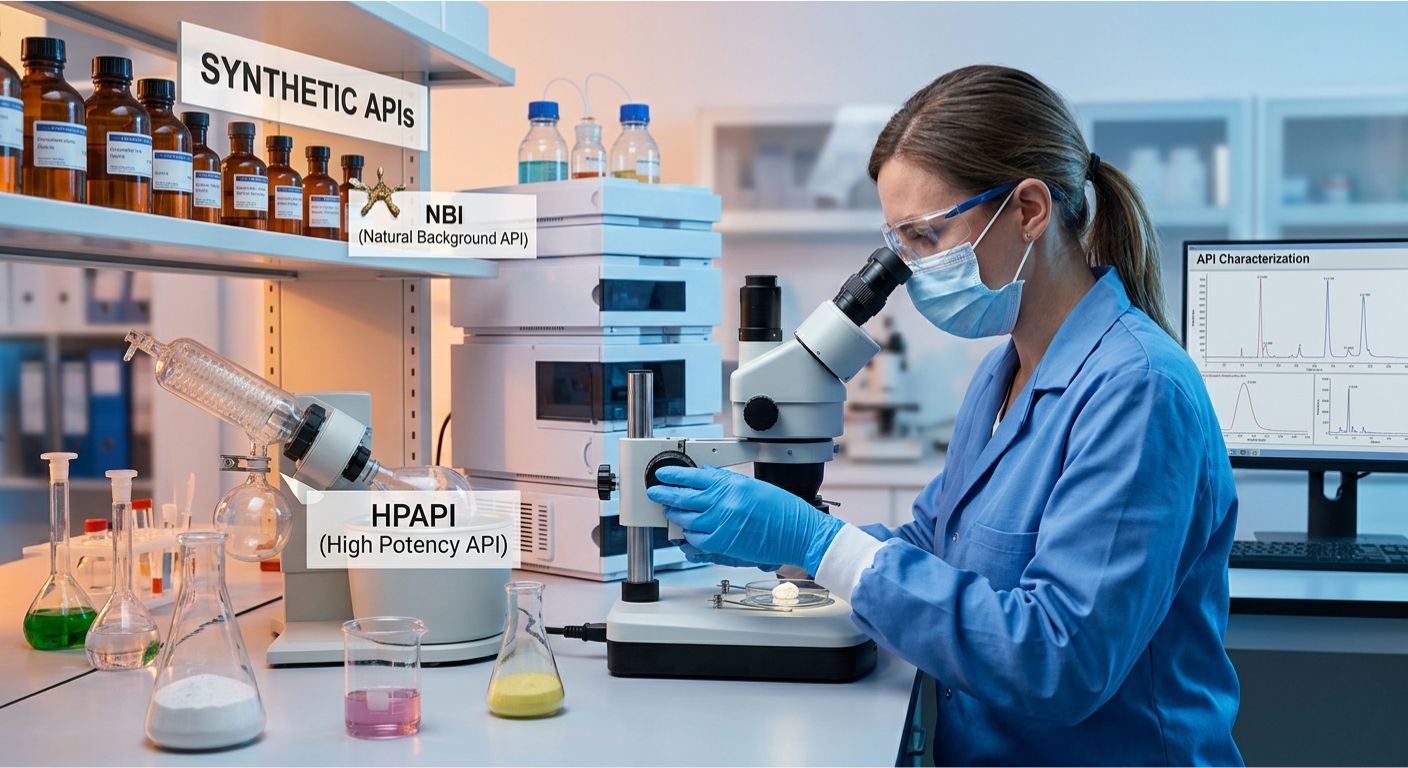
Synthetic APIs
The synthetic APIs are described below:
- Synthetic APIs are made entirely through chemical reactions in a lab or factory. They are the most common API type in the pharmaceutical world.
- Manufacturing involves route design, scale-up, and rigorous purity testing at every step.
- Aspirin is a classic example – synthesised by reacting salicylic acid with acetic anhydride to produce acetylsalicylic acid.
Natural or Plant-Derived APIs
The natural or plant-derived APIs are described below:
- Some powerful medicines come straight from nature. Natural APIs are extracted from plants, animals, minerals, or marine organisms.
- Examples include morphine, derived from the opium poppy, which has been used as a pain-relieving API for centuries.
- Raw material quality varies with climate and geography, so every batch requires careful extraction and purification to maintain standards.
Semi-Synthetic APIs
The semi-synthetic APIs are described below:
- Semi-synthetic APIs start as natural compounds but are then chemically modified in a lab to improve potency, stability, or safety. Producing semi-synthetic APIs requires both biological sourcing and chemical synthesis expertise. These APIs are more complex to manufacture than purely synthetic molecules.
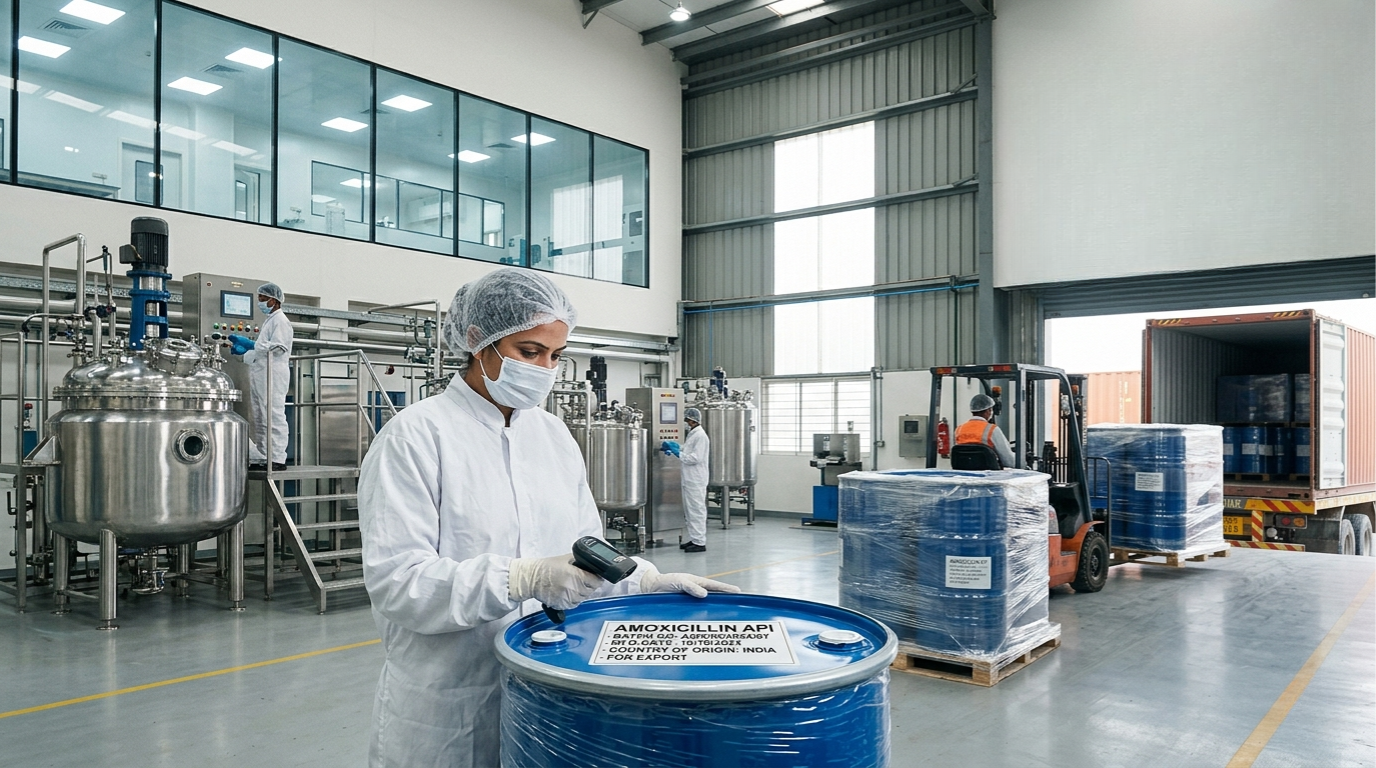
- An example of a semi-synthetic API is amoxicillin, which is a well-known example.
- It is derived from the natural penicillin nucleus and chemically altered to create a broader-spectrum antibiotic.
Biologic APIs (Recombinant DNA-Based)
The biologic APIs are described below:
- Biologic APIs are not made through chemical reactions. They are produced by living cells. Bacteria, yeast, or mammalian cells are engineered using recombinant DNA technology.
- Modern insulin is manufactured by inserting the human insulin gene into bacteria, which then produce the protein in large quantities.
- Biologic APIs require specialized fermentation facilities, cold-chain storage, and sophisticated testing, which is why biologic medicines typically cost significantly more than conventional drugs.
High Potency APIs (HPAPIs)
High-potency APIs are described below:
- HPAPIs are substances so powerful that they work at extremely low doses, typically 10 micrograms or less per kilogram of body weight per day.
- Many cancer-fighting drugs fall into this category.
- Even tiny operator exposure during manufacturing can be dangerous, so HPAPIs require specialized containment like enclosed isolators, negative-pressure rooms, and full protective equipment. This is a regulatory requirement, not optional. [Source]
Types of API in Pharma Based on Therapeutic Application
The following are the major types of API in pharma based on therapeutic application:
- Analgesic and Anesthetic APIs – Ibuprofen and Tramadol for pain; Lidocaine for local anesthesia.
- Antibiotic and Antifungal APIs – Amoxicillin, Azithromycin, and Ciprofloxacin rank among the top 10 active pharmaceutical ingredients by global production. Fluconazole and Itraconazole address fungal infections.
- Cardiovascular and Antidiabetic APIs – Atorvastatin lowers LDL cholesterol; Amlodipine reduces blood pressure. Metformin is the most prescribed antidiabetic API globally. [Source]
- Anticancer and Antipsychotic APIs – Paclitaxel and Imatinib for cancer; Risperidone and Olanzapine for schizophrenia and bipolar disorder.
- Antihistamine and Antidepressant APIs – Cetirizine and Loratadine for allergies; Fluoxetine and Sertraline (SSRIs) for depression and anxiety.
Beyond these, the list of active pharmaceutical ingredients covers antiviral, antihypertensive, gastrointestinal, hormonal, immunosuppressant, anti-epileptic, and respiratory APIs.
How APIs Are Manufactured: From Synthesis to Final Product
API manufacturing is a chain of carefully managed steps and not a single process.
Chemical Synthesis Route
Route scouting identifies the most efficient reaction sequence. Process development optimizes temperature, solvents, and purification. Scale-up then moves production from lab grams to commercial kilograms, with testing at every stage before full production begins.
Fermentation and Biotechnology Route
For natural, semi-synthetic, and biologic APIs, biology replaces pure chemistry. Fermentation grows microorganisms in bioreactors to produce the desired compound. Biologic APIs use mammalian cell cultures followed by downstream purification steps, including chromatography and filtration.
Quality Control and Regulatory Compliance (ICH, WHO-GMP, FDA)
API manufacturing is a chain of carefully managed steps and not a single process.
Chemical Synthesis Route
Route scouting identifies the most efficient reaction sequence. Process development optimizes temperature, solvents, and purification. Scale-up then moves production from lab grams to commercial kilograms, with testing at every stage before full production begins.
Fermentation and Biotechnology Route
For natural, semi-synthetic, and biologic APIs, biology replaces pure chemistry. Fermentation grows microorganisms in bioreactors to produce the desired compound. Biologic APIs use mammalian cell cultures followed by downstream purification steps, including chromatography and filtration.
Quality Control and Regulatory Compliance (ICH, WHO-GMP, FDA)
Every API batch must pass testing for identity, purity, potency, and microbial limits before release. Facilities comply with GMP standards from the WHO, US FDA, and ICH, particularly guidelines Q7, Q8, and Q11. India holds over 500 U.S. FDA-approved API manufacturing facilities – the highest number outside the United States. [Source]
India’s Role in Global API Manufacturing
India is the third-largest API market in Asia-Pacific and a dominant supplier to regulated markets in the US and Europe (https://www.ibef.org/industry/pharmaceutical-india).
Gujarat is the heartland of India’s pharma manufacturing sector. Among API pharma companies in India, Gujarat-based manufacturers are known globally for technical depth and quality compliance.
GCCPL (Gujarat Chemical & Cattle Feed Products Limited) operates from WHO-GMP-compliant facilities in Gujarat, manufacturing and exporting APIs across multiple therapeutic categories for both domestic and international markets.
GCCPL is a global exporter of pharmaceutical products to over 30+ countries with WHO-GMP-certified facilities, regulatory compliance and global standards, custom manufacturing capabilities, and end-to-end supply chain management.
Frequently Asked Questions (FAQs)
What are the 4 Ps of pharma?
The 4 Ps are Product, Price, Place, and Promotion – the pharmaceutical marketing mix. Product is the drug; price covers cost and reimbursement; place is distribution; promotion is communication to healthcare professionals and patients. This is a marketing framework, separate from API classification.
What is the difference between API and excipients in pharma?
An API produces the therapeutic effect; excipients are inactive ingredients that support delivery, stability, or absorption. The API is the engine; excipients are everything else that makes the car drivable. A medicine must have an API to be a drug – excipients are partners, not the active agents.
Why Understanding API Types Matters for Drug Formulation?
The API type directly shapes efficacy, bioavailability, stability, and cost. Metformin (synthetic) is cheap to make, stable at room temperature, and taken as a tablet. A biologic GLP-1 receptor agonist for the same condition needs cold-chain storage, must be injected, and costs far more. [Source] Same disease but very different APIs, very different outcomes.
APIs are the foundation of every medicine you have ever taken. Understanding the types of API in pharma, starting from synthetic molecules to complex biologics, gives you a real edge in pharma, whether you are studying it, working in it, or sourcing it. Your next step: visit GCCPL’s product portfolio at gccpl.com to explore their range of quality-assured, export-grade active pharmaceutical ingredients.